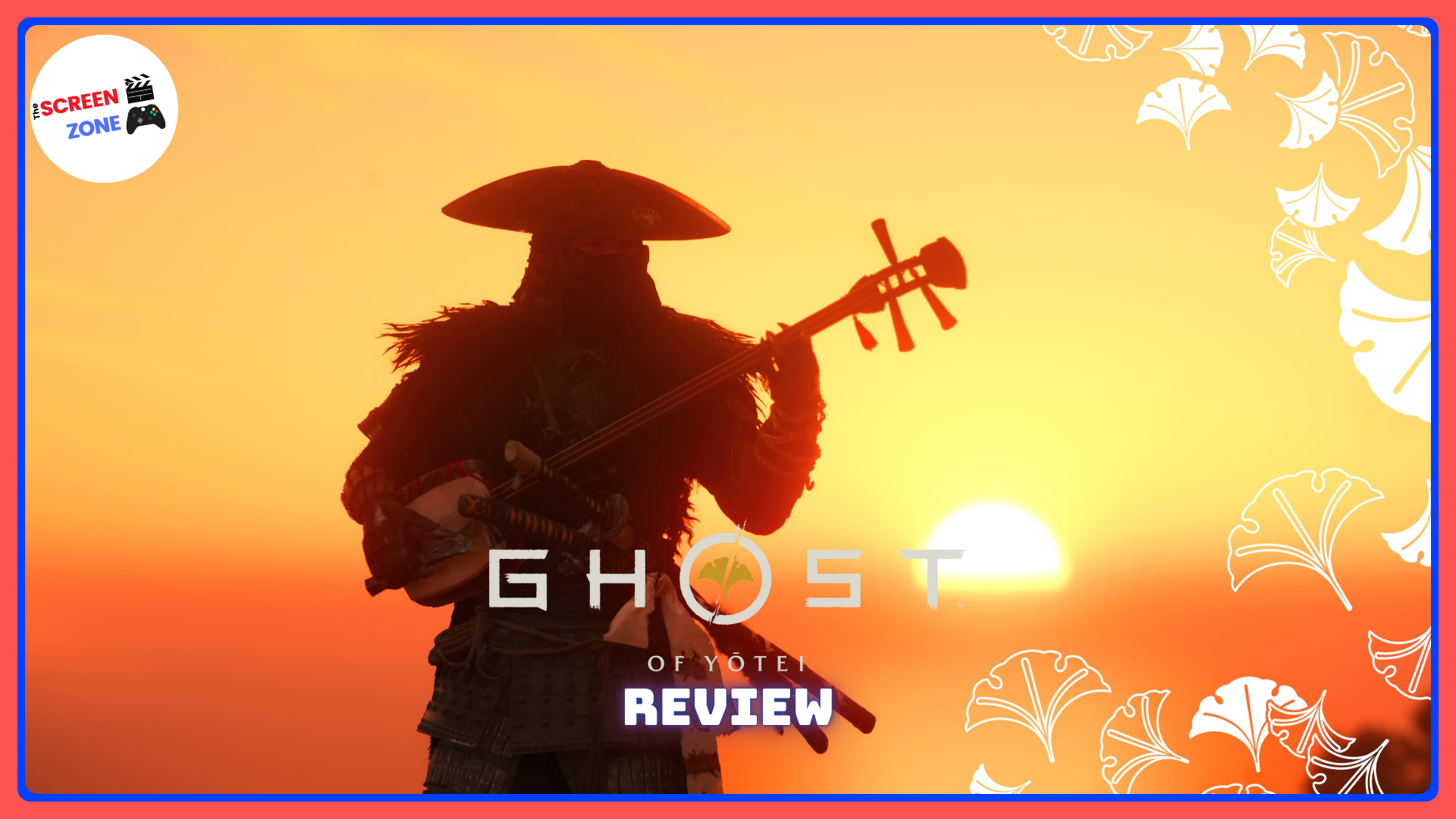

Ghost of Yōtei is an extremely refined iteration of the storytelling and gameplay loop established in 2020’s Ghost of Tsushima. Its best parts are not easily marketable in trailers, and perhaps that’s why it’s hard to explain how its disparate mechanics come together to provide comfort. Set three centuries after the events of Tsushima, the sequel follows in the footsteps of iconic, if formulaic, samurai revenge stories with a new hero and location. While Ghost of Tsushima’s backdrop of the Mongolian invasion made for a memorable setting, Ghost of Yōtei’s strength lies in its characters and the cohesiveness of its world.
In many ways, Ghost of Yōtei is exactly the kind of sequel we’ve come to expect from PlayStation Studios in this generation. It’s big, safe, iterative, but not innovative, and a technical showcase for the PS5, in almost exactly the same way Marvel’s Spider-Man 2, God of War: Ragnarok, or* Horizon Forbidden West* upped the ante from their original iterations. Unfortunately, this process doesn’t invite much critical discourse, at least if you’re someone who wants new grounds broken in the gameplay or even the narrative department. Somehow, Hideo Kojima stands alone on a mountain, perfecting the “formula” for a blockbuster open-world game in Death Stranding 2 while still challenging the player to use their brain.
A New and Better Ghost
PlayStation’s first-party narrative adventure games can live or die on how well-received their protagonists are. Atsu’s backstory may be generic, but she carries the fire of vengeance well on her katana, channelling the spirit of the fearsome onryō. The growing legend of the onryō across 17th-century Ezo is an effective framework for this story, and it keeps popping up throughout the adventure regardless of what activity you’re chasing.
While Jin Sakai invariably looks cool in PlayStation’s marketing materials, his hesitation to commit cool-looking, stealth-focused, dishonourable assassinations always left me frustrated. The majority of the first game’s design felt like a tug-of-war between the player and Jin’s desires. Of course, Jin chose the way of the shinobi at the end, but not before being reminded for the hundredth time that it is dishonourable in the eyes of the shogunate. If a player wanted to play the way of the ghost, it was looked down upon by Jin’s mentor and uncle, the person we spent 90% of the game trying to rescue.
Atsu doesn’t give a crap about any of that. If hunting down the Yōtei Six means being hated in all of Japan, so be it. If she can stab her enemies in the back for information, that’s the way to go. No more of this “uh-oh this doesn’t feel honourable or fair” argument, and I love it. Little details like a growing bounty on her head and being showered with gifts by the people of the land add to her legend.
The Onryō’s Blade
Gone are the stances from the first game, and in are an overwhelming amount of tools at Atsu’s disposal. Between the katana, the odachi, the kusarigama (my favourite) and the dual-katanas, along with plenty of throwable blades, you’ll never find yourself empty-handed in a fight. The pace at which you unlock each weapon ties into each story thread, but how much you’re allowed to master them is left up to you.
Enemy variety has also been ramped up, with different types present on the battlefield, forcing you to change your playstyle with each swing. Of course, sticking with any weapon of choice is also valid, if a time-consuming endeavour. Ghost of Yōtei is a far more aggressive game than its predecessor. While you’re given the option to play stealthily, open combat is often the path the game funnels its encounters to.
Outside of the main quests, there are plenty of excuses to get into skirmishes and get handsomely rewarded for them, too. Bounties scattered across the map lead to a variety of boss fights, with some surprises in store. There’s not much to spend your coin on besides cosmetics, but you’ll almost never have too much of it, leading to new hunts in each region, no matter your pace. This works the other way around, too. As Atsu’s legend as the onryō grows, mercenaries looking to make big bucks will start hunting you down.
READ MORE: DEATH STRANDING 2 HEALED ME
Each of the Yōtei Six has something to teach Atsu, both in combat and outside of it. Primarily, it boils down to learning and utilising every skill you acquire in the region where the boss resides. While it is formulaic, it’s not ineffective. The narrative also employs cliched tropes of bloated AAA games. “Oh no, the boss got away before we could sink our blade in his neck! Surely this won’t lead to another hour or two of meandering before getting down to business!” — I jest. You get the idea.
The addition of companion combat is also a nice gimmick, though it hardly changes the level of challenge or strategic approach. The wolf is a good boy. 10/10 will pet again, if only the game would let me. Perhaps the game’s most underrated addition is the one-time throwable blades you can pick up during combat, which always help with crowd control. Plus, it looks cool.
Perfected Formula
Ghost of Tsushima was often regarded as the apex of the Ubisoft open-world gameplay formula. Yōtei builds on that foundation with razor-sharp focus, ensuring it has something surprising to deliver at every turn without straying too far from the tried-and-tested formula. You’ll still be following foxes to their shrines, dipping in hot springs for health boosts, paying respects at landmark shrines, and, new to this one, following wolves to battle for skill points.
Some of these can start feeling tedious, but Yōtei’s designers do everything in their power to avoid making it feel like a checklist. This starts at the map menu, which is more obscured with fewer activities across it. Unfogging the map can be done through exploration or by buying maps from the cartographer. Even then, you’re expected to solve a mini-puzzle before being gifted with the location of POIs.
Like Tsushima, Yōtei is divided into various biomes, though this time the various zones are disconnected. Of course, fast travel on the PS5 has never been an issue, and it works like a charm. If you don’t want to unfog the map by spending money, playing various songs on the shamisen will lead the guiding wind towards points of interest.
Like any open-world game, there are fixed vendors in the world you can go to for various needs. These vendors aren’t lifeless, though, as each has a specific narrative chain attached to it. While they’re optional, they add just a little more colour to the state of the world for those who can’t just pick up a sword against their oppressors.
These vendors and other supporting characters make up Atsu’s wolf pack, which, in its nifty menu tab, always keeps you updated on what new gear is available. You don’t always need to visit them either, as various friends will make their way to Atsu’s camp randomly.
This may be an under-discussed aspect, but Ghost of Yōtei is one of, if not the most polished, open-world games I’ve ever played. That’s a big compliment given the scale of the project, and it also goes a long way in helping forget that it’s building on a formula crafted by lesser creators. Yes, I’m of course talking about Ubisoft. Somehow, Sucker Punch has yet again made a better Assassin’s Creed game than Ubisoft, and the irony of beating Ubisoft at making a Japan-set shinobi/samurai fantasy isn’t lost on me.
PS5 Performance and Modes
One setting I didn’t expect to see here is a ray tracing mode. Like Assassin’s Creed Shadows, Yōtei also includes RT-accelerated global illumination. And just like that game, it’s very tough to notice in motion. If you’re one of the lucky ones with a PS5 Pro, just toggle the RT performance mode and forget about the rest. For us mere mortals, the standard performance mode is plenty smooth, maintaining a rock-solid 60fps.
READ MORE: DOOM: THE DARK AGES PACKS A LOT OF PUNCH
Kurosawa mode returns, and while it’s reminiscent of old-school samurai films, the audio treatment often throws out any immersion I’d hope to have with the visuals. Miike mode ups the gore and mud with a tighter camera for gritty combat, which is cool but not my cup of coffee. Watanabe mode, though, is peak. Lo-fi beats in the style of Samurai Champloo are a perfect companion for Atsu and her mount exploring the sweeping landscapes of Ezo. They’re perfectly subtle enough in exploration and combat to not draw too much attention, and swiftly fade out during narrative cut-scenes.
Verdict
Ghost of Yōtei is a perfection of the modern, but bloated, open-world video game, balancing narrative heft with sharp refinements in combat and exploration, all delivered with exceptional polish.
Ghost of Yōtei is available on PlayStation 5.
REVIEW COPY PROVIDED BY PLAYSTATION.